Solofa Fatu Jr.
Solofa Fatu Jr., best known to millions around the world under the ring names Rikishi and Fatu, has become one of the most respected and influential figures in professional wrestling. Born on October 11, 1965, in San Francisco, California, he grew from a young boy raised in a proud Samoan household into a global performer who left a permanent mark on WWE, New Japan Pro-Wrestling, World Championship Wrestling, and Total Nonstop Action Wrestling. His life story is deeply rooted in culture, tradition, and an unbreakable loyalty to family, making him a powerful symbol of the Anoa’i dynasty.
Early Life and Samoan Heritage
Solofa Fatu Jr. was raised in an environment where family unity and cultural identity were essential. As a child in a large Samoan family, he learned discipline, respect, and the importance of heritage—values that would shape his character inside and outside the ring. Growing up in San Francisco, he was surrounded by relatives who were already breaking into the wrestling world, which sparked his interest in following the same path. The Anoa’i family name was already rising in prominence, and he found his inspiration from the successes of close relatives who paved the way before him.
The Road to Wrestling Greatness
His wrestling journey began at a young age, influenced by the passion and commitment of his family. Solofa trained rigorously and eventually made his way into international wrestling circuits. His work in New Japan Pro-Wrestling allowed him to develop a unique style, blending agility with power. He later performed in WCW and other promotions, further shaping his in-ring identity.
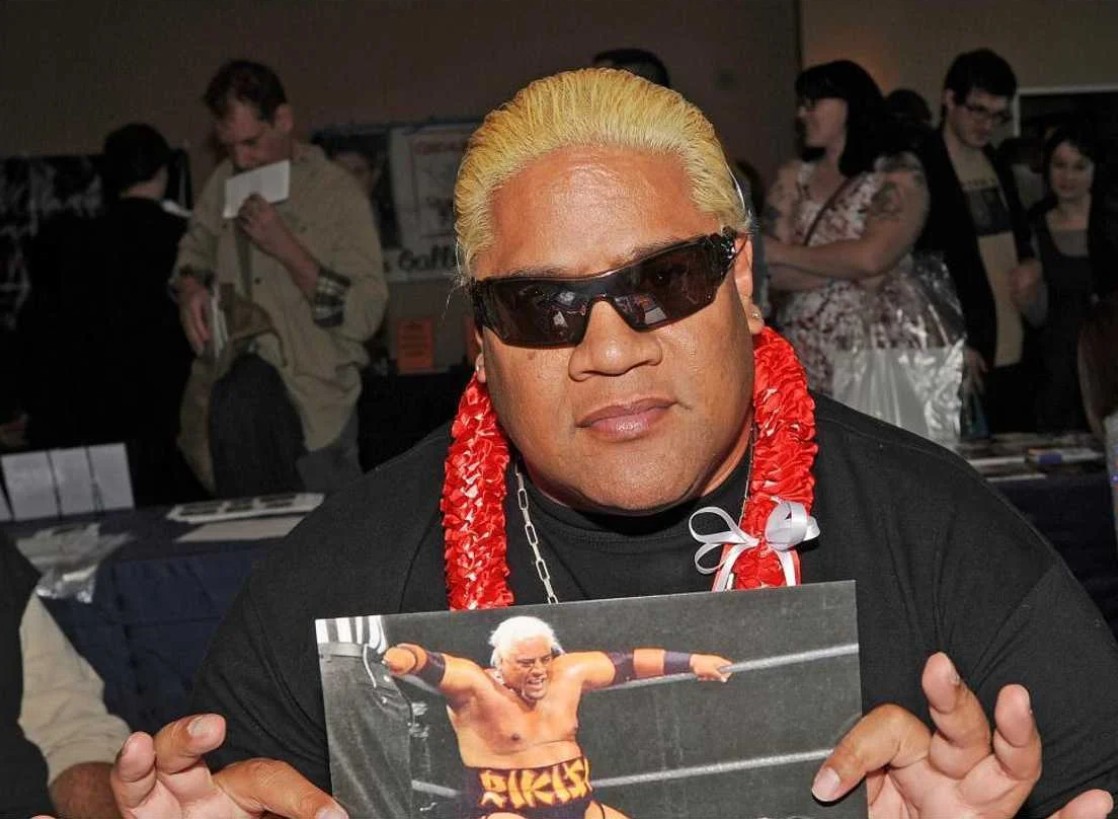
However, it was his arrival in WWE that turned him into a global icon. While he experimented with various characters early in his WWE career, his transformation into Rikishi created a legacy that still resonates today. Rikishi became a fan favorite with his trademark blonde hair, sunglasses, and charismatic dance routines. His dramatic presence, combined with a mixture of humor and raw strength, made him unforgettable during the Attitude Era and later years. Moves like the Samoan Drop, the corner avalanche, and the legendary Stink Face brought him worldwide recognition and cemented his place in sports entertainment history.
Marriage to Talisua Fuavai-Fatu
Behind the larger-than-life performer was a man deeply committed to his family. Solofa Fatu Jr. married Talisua Fuavai-Fatu in 1985, long before he rose to fame on mainstream television. Their marriage became a foundation of stability throughout the unpredictable journey of a professional wrestler. Talisua supported him through his demanding schedule, long travel periods, and the physical toll the sport required. Their bond stands as one of the most enduring relationships connected to the WWE world, showcasing loyalty, partnership, and shared dedication.
Children of Solofa Fatu Jr.
Solofa Fatu Jr. is the proud father of six children, many of whom have followed in his footsteps to become major stars. His sons Jey Uso, Jimmy Uso, and Solo Sikoa have risen to significant prominence in WWE, carrying forward the powerful legacy of the Anoa’i bloodline. They have headlined major events, won championships, and contributed to one of the most dominant factions in modern wrestling history.
His other children—Jeremiah Peniata Fatu, Thavana Monalisa Fatu, and Thamiko T. Fatu—each have their own paths. While some maintain private lives away from the spotlight, others explore opportunities in entertainment and creative fields. Regardless of their career choices, all of Solofa’s children represent the strength and unity of their family roots.
Grandchildren and the Next Generation
The Fatu family legacy continues through Solofa’s grandchildren, including Jaiden Fatu and Jayla Fatu. Although still young, they reflect the next branch of a family tree deeply connected to both Samoan culture and the world of professional wrestling. Solofa takes great pride in watching the new generation grow, knowing that the values and traditions he inherited will continue through them.
Siblings and Close Family Bonds
Family has always played an essential role in Solofa Fatu Jr.’s life. He grew up alongside siblings who were also destined for greatness in the wrestling world. His brothers Umaga (Edward Fatu) and Sam Fatu (The Tonga Kid) became well-known talents, contributing to the already powerful influence of the Anoa’i dynasty. Their achievements, along with Solofa’s, created a trio of brothers who significantly shaped modern professional wrestling.
Their bond extended beyond the ring. Whether working together, supporting one another through personal challenges, or simply celebrating cultural traditions, the Fatu brothers shared a connection that remained strong throughout their lives. The passing of Umaga in 2009 was a devastating moment for Solofa, but the memory of his brother continues to live in the hearts of fans and family members.
Cousins and the Anoa’i Dynasty
Solofa Fatu Jr. is closely tied to one of the largest and most successful wrestling dynasties in history. His cousins include world-renowned performers such as Roman Reigns and, through traditional Samoan family ties, Dwayne “The Rock” Johnson. The Anoa’i family also includes legendary figures like Afa and Sika, who laid the foundation for the generations that followed.
These family bonds stretch across decades and across the world, creating a lineage unmatched in the world of sports entertainment. Their unity, loyalty, and dedication to both culture and performance have shaped wrestling as we know it. Solofa’s place within this lineage is central, serving as both a representative of tradition and a mentor to younger members who continue to join the industry.
The Enduring Legacy of Solofa Fatu Jr.
Solofa Fatu Jr.’s story is more than the account of a successful wrestling career. It is a story of heritage, family loyalty, and cultural pride. His achievements in WWE and beyond brought joy to millions, but his greatest accomplishment may be the legacy he continues to build through his children, grandchildren, and extended family. Today, he remains a respected figure in wrestling communities and an inspiration to fans who admire his strength, charisma, and devotion to what matters most—family.
The Story Behind Solofa Fatu Jr.’s Rise in WWE
The transformation of Solofa Fatu Jr. into one of WWE’s most memorable superstars did not happen overnight. His journey through different characters and storylines was a process of growth, experimentation, and resilience. Before he became Rikishi—the larger-than-life persona fans instantly recognize—Solofa performed under multiple gimmicks that helped shape his understanding of crowd psychology and ring performance.
In the early 1990s, he appeared in WWE as part of The Headshrinkers, teaming with Samu. This version of Fatu was fierce, intense, and deeply connected to traditional Samoan wrestling styles. His portrayal emphasized the raw power and unpredictability associated with island warriors, and it was during this time that his athleticism and strength became widely recognized. His ability to move with surprising agility for his size made him stand out among heavyweights, earning him both respect and attention from fans and peers.
After transitioning away from The Headshrinkers, he experimented with a character focused on urban street life, where his message revolved around avoiding violence and making better life choices. Although this persona was short-lived, it allowed Solofa to show his versatility and laid the groundwork for the comedic timing, emotional connection, and confidence he would later bring to Rikishi.
Becoming Rikishi: A Defining Era in WWE
Rikishi emerged during one of WWE’s most popular periods, the Attitude Era. With bright blonde hair, traditional Samoan sarongs, and an infectious energy, the character captured the hearts of wrestling fans worldwide. Solofa embraced this transformation and brought depth to Rikishi through physical storytelling and memorable entertainment moments.
His famous dance routines with Too Cool—Scotty 2 Hotty and Grandmaster Sexay—became weekly highlights. These segments added humor and joy to the show, offering a lighter contrast to the more aggressive and adult-themed content dominating the era. At the same time, Rikishi proved he was not only an entertainer but a serious competitor. His power in the ring made him a credible threat to any opponent, and his finishing moves, particularly the Samoan Drop and Banzai-style splash, became signature elements of his matches.
The Stink Face became one of wrestling’s most iconic comedic moves, performed with a confidence and charisma that only Solofa could deliver. Fans loved the unpredictability of the moment, and the move soon became a defining element of his career. Even those unfamiliar with WWE during that era often remember Rikishi from highlight reels, demonstrating his lasting impact on mainstream pop culture.
Major Rivalries, Alliances, and Storylines
Throughout his time in WWE, Solofa Fatu Jr. took part in numerous memorable storylines. His involvement in the storyline “I did it for The Rock” created a dramatic turning point in his character’s arc. Playing a role in the narrative surrounding the attack on Stone Cold Steve Austin during Survivor Series, Rikishi became a focal point of a major feud. This storyline showcased his ability to portray both humorous and serious characters, proving his versatility again.
His alliances and rivalries with top stars—including Triple H, Stone Cold, The Rock, Kurt Angle, and The Undertaker—helped elevate his position in WWE. He became a key figure who could adapt to any storyline, making him valuable to the company during transitional periods.
Rikishi’s tag team success also shaped his career. His partnership with Too Cool helped introduce a new kind of entertainment-focused tag team dynamic. Their chemistry brought balance to WWE programming, demonstrating that wrestling could be both intense and joyful without losing authenticity.
The Influence of Samoan Culture in His Persona
Cultural representation has always been a central part of Solofa Fatu Jr.’s identity. Rikishi’s attire, dance movements, pre-match rituals, and general presence in the ring reflected strong Samoan traditions. His performances honored his ancestry, allowing global audiences to appreciate Samoan culture in a new way.
From the moment he stepped into the ring, fans could sense the pride he carried. His traditional Samoan dance—more celebratory than intimidating—added layers of meaning to his character. Solofa understood that wrestling was a stage not just for athletic performance but for cultural expression. Rikishi became, in many ways, an ambassador of Samoan heritage.
This cultural storytelling is a hallmark of the Anoa’i family. Whether through traditional tattoos, attire, chants, or behavior, members of the family have carried their heritage proudly across generations. Solofa’s contribution remains one of the most visually striking and influential portrayals of Samoan identity in WWE history.
Family First: The Core of Solofa Fatu Jr.’s Life
Even with international success, the heart of Solofa’s world has always been his family. His household is a gathering place of strong cultural values, love, and unity. Solofa and his wife, Talisua Fuavai-Fatu, built an environment where their children grew up learning the importance of tradition, respect, and perseverance.
Talisua played a vital role during the height of Solofa’s career. While he traveled for shows, tours, and international events, she maintained stability at home and ensured their children grew up with structure and guidance. Their marriage represents a partnership rooted in loyalty and mutual respect, qualities that their children have carried into adulthood.
Solofa speaks proudly of his children, especially those who have entered the wrestling world. Watching Jey, Jimmy, and Solo rise through WWE brings him immense joy, as each carries a part of him with them. They honor the values he instilled—work hard, stay loyal, respect your culture, and protect your family.
The Sibling Bond: Umaga and Sam Fatu
The relationship between Solofa and his siblings shaped his life and career. His brothers, Umaga and Sam Fatu, were more than family—they were partners in a shared wrestling journey. Although each followed different paths, their careers were interconnected through the Anoa’i legacy.
Sam Fatu, also known as The Tonga Kid, was one of the earliest breakout stars among the younger generation of the family. His success in the 1980s inspired Solofa during his own early training years. The two brothers shared experiences in wrestling schools, promotions, and often supported one another during transitions between character changes and companies.
Umaga, known for his fierce persona and unmatched intensity, left a legacy of his own. His in-ring dominance and unforgettable rivalries helped define mid-2000s WWE programming. Solofa has often spoken lovingly of Umaga, remembering him as both a gentle soul and an incredible performer. Umaga’s passing in 2009 deeply affected the family, but his memory continues to live through tributes, stories, and the careers of the next generation.
The Global Impact of the Anoa’i Wrestling Dynasty
As a key branch of this legendary family, Solofa Fatu Jr. stands among the figures who helped build the dynasty’s name across the world. The Anoa’i family is not just a group of wrestlers—it is a cultural force that changed professional wrestling forever. With names like Roman Reigns, The Rock, The Usos, Rikishi, Umaga, Yokozuna, and many others, they have shaped multiple eras of sports entertainment.
Solofa’s contributions helped make the dynasty more diverse in storytelling and audience appeal. He brought entertainment value, humor, cultural representation, and emotional depth to the family legacy. Today, when fans speak of Samoan wrestlers, they speak of a tradition of excellence that Solofa helped solidify through decades of dedication.
The Rise of His Children in WWE
The rise of Solofa Fatu Jr.’s children in WWE is one of the most powerful extensions of his legacy. Jey Uso, Jimmy Uso, and Solo Sikoa have each forged successful careers, yet all carry the unmistakable influence of their father’s teachings. Growing up, they watched Solofa perform around the world, and from early childhood they were surrounded by the energy, discipline, and passion that defined the Anoa’i family.
Jey Uso
Jey Uso, known for his emotional storytelling and incredible athletic ability, has become a central figure in WWE’s modern era. His transformation from one half of The Usos into a charismatic solo performer shows his evolution as a wrestler and entertainer. Jey’s matches often reflect the same spirit of determination that his father once displayed, and his ability to convey raw emotion has earned him widespread respect.
Jimmy Uso
Jimmy Uso, equally talented, has made his own mark through his dynamic presence and skill in tag team competition. Together, Jimmy and Jey created one of the most successful tag teams in WWE history. Their chemistry, passion, and dedication mirror the energy Solofa once brought to his partnerships in the ring. Fans often compare their teamwork to the same unity and power Rikishi showed during his career.
Solo Sikoa
Solo Sikoa, the youngest of the trio, has emerged as one of WWE’s fastest-rising stars. With a powerful, hard-hitting style and a calm, intimidating presence, Solo represents a new generation of Samoan strength. His performances have already captured the attention of fans worldwide, and many see him as a future dominant force. Solofa’s influence is clear in Solo’s discipline, intensity, and commitment to storytelling.
While not all of Solofa’s children entered the wrestling world, each carries a piece of his legacy. His daughter Thavana Monalisa Fatu has grown a strong following through modeling, content creation, and her powerful connection to Samoan culture. Thamiko T. Fatu and Jeremiah Peniata Fatu maintain more private lives, but their bond with their father remains unbreakable. Whether in the spotlight or behind the scenes, they represent the strength and unity of the Fatu family.
Also Read: Thavana Monalisa Fatu A Comprehensive Biography
Grandfatherhood and the Growth of the Next Generation
For Solofa Fatu Jr., one of the greatest joys in life is seeing his family expand through new generations. As a grandfather to Jaiden Fatu and Jayla Fatu, he embraces the role with love and pride. The laughter of grandchildren, the gatherings for family celebrations, and the continuation of Samoan traditions all bring him a deep sense of fulfillment.
In Solofa’s household, culture and family history are passed down through stories, performances, and shared experiences. The next generation is being raised with the same values that shaped Solofa himself—discipline, respect, humility, and pride in their heritage. Although still young, his grandchildren already carry the spirit of the Fatu family, growing up steeped in the traditions that have defined the Anoa’i dynasty.
Life After WWE: Mentorship, Training, and Legacy Building
After stepping away from full-time wrestling, Solofa Fatu Jr. focused on building the next generation of talent. Through his work with KnokX Pro Entertainment, a wrestling training academy he co-founded, Solofa dedicated himself to teaching athletes not only how to wrestle but how to respect the craft. His coaching style blends discipline with encouragement, emphasizing the importance of storytelling, character development, and physical conditioning.
Many trainees from KnokX Pro speak highly of Solofa’s guidance, noting that he brings the same passion to teaching that he once brought to the ring. His emphasis on cultural representation and personal growth helps students understand that wrestling is more than moves—it is a commitment to expressing emotion, honoring identity, and connecting with audiences worldwide.
Even outside formal training, Solofa serves as a mentor to younger members of the Anoa’i family. His advice has played a role in the evolution of several modern stars, offering them support and perspective as they navigate the pressures of the industry. His home often becomes a place of gathering, where family members share meals, stories, music, and history, strengthening the bonds that keep the dynasty united.
Cultural Influence and Representation
One of the most meaningful aspects of Solofa Fatu Jr.’s career is his influence on the representation of Samoan culture in global entertainment. Through his performances, attire, dances, and traditional elements, he brought Samoan identity to international audiences in a positive and powerful way. At a time when representation was far more limited, Solofa used his platform to showcase cultural pride.
His character never relied on mockery or stereotype. Instead, Rikishi became a symbol of joy, strength, and authenticity. Fans admired the way he balanced humor with power, showing the world that Samoan performers could be diverse, charismatic, and larger than life.
This cultural influence continues today through his children, grandchildren, and extended family. Each new generation builds upon what Solofa helped start, creating a legacy that extends beyond wrestling into broader pop culture. The strength of Samoan identity seen in modern WWE, particularly through The Bloodline storyline, echoes the foundation Solofa helped build years before.
The Impact of The Bloodline and His Role in Its Legacy
The Bloodline, led initially by Roman Reigns and involving various members of the Anoa’i family, has become one of WWE’s biggest storylines. Although Solofa Fatu Jr. is not an active member of the storyline, his influence is felt deeply throughout it. His sons, Jey and Jimmy Uso, became central figures in the faction, and their performances reflect decades of experience passed down by their father.
Solo Sikoa’s rise within The Bloodline added another dimension, reinforcing the narrative of strength and unity. Many fans credit Solofa as one of the architects of the family’s modern success, as his career helped build the credibility and appeal that the Anoa’i family now holds. Without the groundwork laid by performers like Rikishi, Umaga, Yokozuna, and The Wild Samoans, The Bloodline might never have reached such incredible heights.
Solofa watches these developments with pride, celebrating the accomplishments of his children while reflecting on what his own contributions meant to wrestling. Through them, the legacy continues, expanding and evolving with every generation.
The Influence of Solofa Fatu Jr. on Fans Around the World
The impact of Solofa Fatu Jr. reaches far beyond wrestling rings and television screens. His connection with fans has always been genuine, built on authenticity, charisma, and a sense of joy that made people smile the moment he appeared. For many, Rikishi represented the fun, lighthearted spirit of WWE’s golden eras, reminding audiences that wrestling is not only about violence or conflict, but also about entertainment, character, and emotional expression.
Fans across the world recall the excitement they felt when Rikishi’s music hit. Whether he was performing with Too Cool or entering the ring against world champions, he brought an energy that could change the mood of the entire arena. His dance sequences became iconic, not because they were simply comedic, but because they reflected confidence, celebration, and pride in his Samoan identity. He showed that even a superstar of his size could move with rhythm, style, and personality, breaking stereotypes that often followed heavyweight performers.
Over the years, countless fans have approached Solofa to share their childhood memories. Many remember watching him with their parents, siblings, or friends, making him a symbol of nostalgia and family bonding. His character transcended wrestling; he became an emotional anchor for many fans who grew up during the Attitude Era and the early 2000s. Today, even younger fans who were not yet born during his peak years recognize his image through viral clips, hall of fame features, and the success of his children.
Character, Values, and Personal Strength
While many know him as Rikishi, those who have met Solofa Fatu Jr. describe him as kind, humble, and deeply grounded. His personality reflects the values he grew up with: respect for elders, loyalty to family, and pride in his cultural roots. Unlike many performers who adopt a persona very different from who they are, Solofa has always remained close to his real identity.
Throughout his career, he emphasized the importance of staying true to oneself. He never lost sight of his responsibilities as a husband, father, brother, mentor, and cultural representative. Those who trained under him often describe him as firm but compassionate, someone who teaches discipline not through intimidation but through encouragement and honesty.
His resilience also defines him. Wrestling is a physically demanding profession, and Solofa overcame numerous injuries, character changes, and challenges during his journey. Yet he maintained his positive spirit, proving that success comes not only through talent but through heart.
Also Read: Caden Crain Life Childhood Age and Bio of Stormy Daniels Daughter
Extended Family Connections: The Larger Anoa’i Circle
The Anoa’i family extends far beyond immediate siblings and cousins. It is a vast, interconnected circle of relatives, many of whom share the same heritage of wrestling excellence. Solofa has remained closely connected with the broader family, participating in gatherings, celebrations, and cultural events that preserve their Samoan identity.
Members of the extended family include legends like Afa and Sika, the Wild Samoans who trained many of the younger generation. Their influence shaped the careers of countless wrestlers, including Solofa himself. Yokozuna, a former WWE Champion known for his intimidating size and unmatched presence, also belongs to this powerful lineage.
Other relatives, such as Roman Reigns, The Rock (through Samoan cultural ties), The Tonga Kid, Jacob Fatu, Lance Anoa’i, and many more, form a network that stretches across companies and countries. This unity is one of the most remarkable aspects of the Anoa’i dynasty. Despite different career paths, everyone shares the same family pride and mutual support. Solofa has always been a central figure within this web of connections, respected for his achievements and loved for his character.
Life Today: Legacy Work, Appearances, and Cultural Leadership
Today, Solofa Fatu Jr. continues to remain active in the wrestling community through appearances, speaking engagements, mentorship, and cultural work. While he no longer competes inside the ring, his wisdom and presence are still felt. He frequently attends wrestling conventions, fan signings, and Samoan cultural events, connecting with people who admire both his career and his personal journey.
His work with young wrestlers has become one of his greatest passions. Teaching the next generation reminds him of the values that shaped his own life—hard work, discipline, and loyalty. He uses his platform to encourage young people to embrace their identity, pursue their craft seriously, and represent their families with pride.
Solofa also stays involved in Samoan community activities, helping promote cultural traditions, language, music, and storytelling. He is often seen participating in family gatherings, traditional ceremonies, and celebrations that strengthen generational ties. For him, heritage is not something to display—it is something to live.
Rikishi’s Enduring Presence in Pop Culture
Even years after stepping out of the spotlight, Rikishi remains a relevant and beloved character in pop culture. His dance routines, signature moves, and iconic look continue to appear in video games, online compilations, fan art, and social media clips. His influence has extended to modern entertainment beyond wrestling, with references in podcasts, comedy shows, memes, and nostalgic discussions.
The fact that younger audiences still recognize him—despite never seeing him wrestle live—shows the timelessness of his character. He belongs to an era that continues to define WWE’s identity, and his charisma left a mark that newer characters still aim to achieve. As long as wrestling fans celebrate the Attitude Era and early 2000s, Rikishi will always remain part of the conversation.
The Emotional Legacy of Solofa Fatu Jr.
When reflecting on the life and career of Solofa Fatu Jr., one sees more than championships, storylines, and fame. His legacy is emotional. It is the legacy of a family man who carried his heritage with pride, who gave audiences joy, who inspired new generations, and who proved that authenticity can create lifetime memories.
He contributed to wrestling during a time when larger-than-life personalities dominated, yet he managed to stand out not through intimidation alone but through heart. He created a character that fans could love, laugh with, cheer for, and celebrate. His children now lead the charge in continuing that story, proving that the Fatu family’s influence will last for decades.
Continuing the Lineage: A Family Rooted in Heritage and Honor
The strength of the Fatu and Anoa’i lineage lies not only in their achievements but in the values that unite them. Solofa Fatu Jr. has always taught his children and grandchildren that the greatest victories are not won in the ring but in life. He encourages them to embrace humility, protect one another, honor their heritage, and uphold the standards set by the generations that came before.
Family gatherings in the Fatu home bring together relatives from across the world, each carrying stories of triumph, struggle, and perseverance. Solofa often leads these gatherings with laughter, wisdom, and reminders of the importance of culture. His presence remains a guiding light, grounding the younger generation in a world filled with new pressures and modern challenges.
As his children reach new heights in WWE, they carry with them the lessons he instilled—lessons that shape their careers and define their legacy. Whether it is Jey’s emotional storytelling, Jimmy’s fiery passion, or Solo Sikoa’s fierce determination, each performance reflects the spirit of their father. They stand not only as professional athletes but as ambassadors of their culture, continuing the work that Solofa began decades earlier.
A Legacy That Continues to Inspire
The legacy of Solofa Fatu Jr. extends beyond statistics, championships, or famous matches. His legacy lives in the hearts of fans who witnessed his journey, in the performers he trained, and in the family he guided with unwavering dedication. His influence persists in modern wrestling through the rise of his children and the continued popularity of the Anoa’i dynasty.
Fans often describe Solofa as someone who brought them joy during difficult times. His playful dances, charismatic smile, and unforgettable performances made people laugh, smile, and feel part of a global community united by entertainment. This emotional impact is something few performers ever achieve, marking him as one of wrestling’s most treasured figures.
Even today, when fans revisit Rikishi highlights, they feel a sense of nostalgia and admiration. His persona remains timeless, bridging generations of wrestling lovers and reminding people of an era defined by creativity, passion, and authenticity. His work paved the way for future Samoan stars to shine on the world stage, opening doors for younger performers inspired by his greatness.
Also Read: Teri Polo Career Movies Life Story & Net Worth Guide
The Lasting Influence on Wrestling History
Solofa Fatu Jr. is part of a rare group of performers who helped shape the direction of professional wrestling. His style influenced both entertainment-focused characters and powerful heavyweights, demonstrating that a wrestler can be larger than life without losing relatability. This duality made him uniquely influential.
His role within WWE’s Attitude Era contributed to one of the most successful periods in entertainment history. His matches, segments, and alliances continue to be celebrated in documentaries, video games, and anniversary specials. As a WWE Hall of Famer, his work has been permanently recognized, ensuring that future generations will learn about his contributions.
Beyond accolades, Solofa remains respected by peers across the industry. Fellow wrestlers often speak about his generosity, his willingness to support others, and his positive energy behind the scenes. His influence reaches far beyond his own career and continues to shape the industry through the performers he helped inspire.
Conclusion: The Legacy of Solofa Fatu Jr. Lives On
The life of Solofa Fatu Jr. is a story of culture, family, passion, and perseverance. From his early days in San Francisco to his rise in WWE, he built a legacy rooted in authenticity and pride. As Rikishi, he entertained the world with charisma, dancing, and unforgettable moments. As Solofa, he became a pillar of his family, a mentor to young wrestlers, and a guardian of Samoan heritage.
Solofa Fatu Jr. remains a symbol of what it means to embrace identity, honor family, and use one’s gifts to uplift others. His legacy is not just remembered—it is lived every day through those he inspired. And as long as wrestling evolves, his name, his impact, and his spirit will remain etched into its history.
Frequently Asked Questions About Solofa Fatu Jr.
Who is Solofa Fatu Jr.?
Solofa Fatu Jr. is an American professional wrestler best known as Rikishi in WWE, and a respected member of the legendary Anoa’i wrestling family.
How old is Solofa Fatu Jr.?
He was born on October 11, 1965, and is 60 years old.
Who is Solofa Fatu Jr.’s wife?
His wife is Talisua Fuavai-Fatu, whom he married in 1985.
How many children does he have?
He has six children: Jey Uso, Jimmy Uso, Solo Sikoa, Jeremiah Peniata Fatu, Thavana Monalisa Fatu, and Thamiko T. Fatu.
Does Solofa Fatu Jr. have grandchildren?
Yes, he has grandchildren including Jaiden Fatu and Jayla Fatu.
Who are his siblings?
His siblings include Umaga (Edward Fatu) and Sam Fatu (The Tonga Kid).
Is he part of the Anoa’i family?
Yes. Solofa is a central figure in the Anoa’i wrestling dynasty, which includes Roman Reigns, The Rock (through cultural ties), Yokozuna, and many others.
About the Author