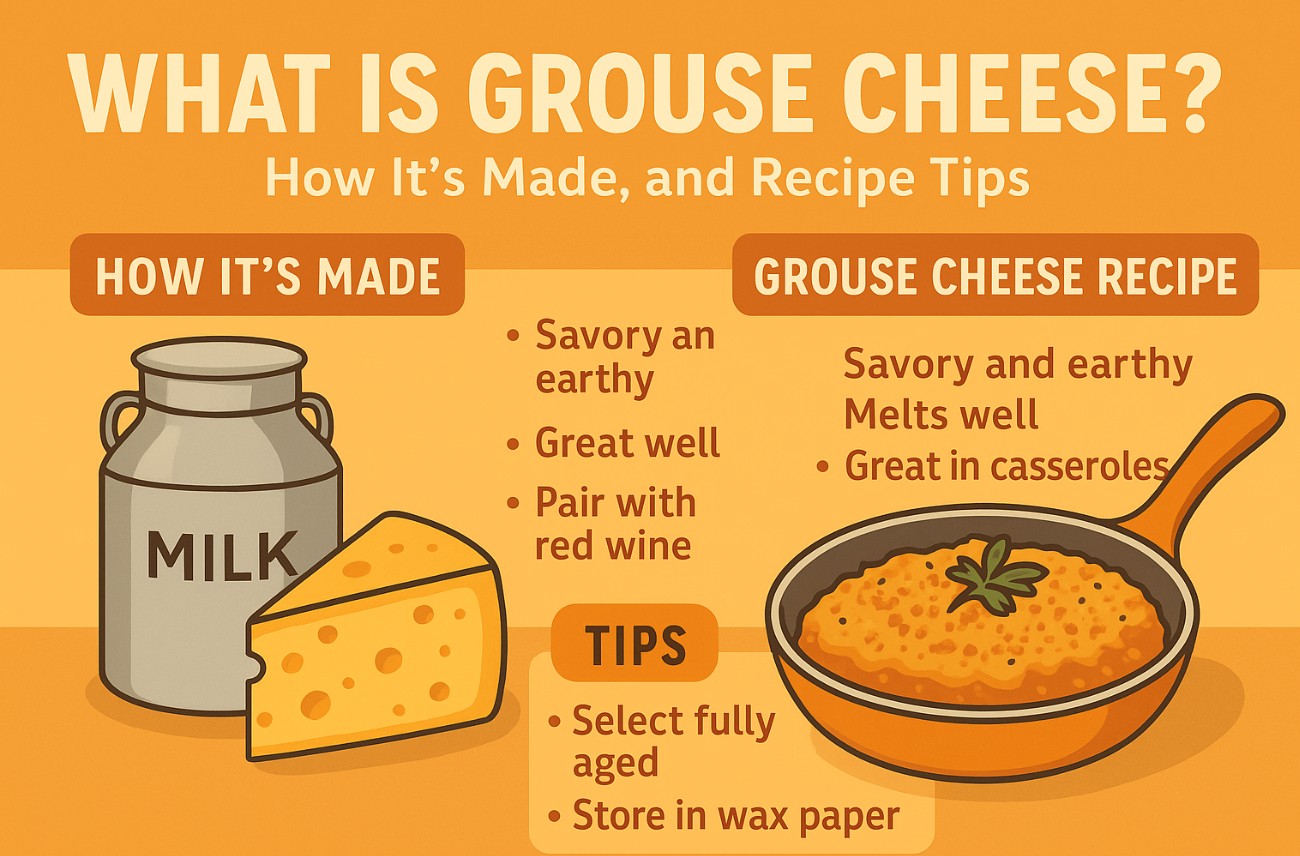
Grouse cheese is one of the most intriguing and lesser-known specialty cheeses gaining attention among food enthusiasts, gourmet chefs, and curious home cooks. As food culture expands beyond mainstream cheeses like cheddar, gouda, and brie, more people are asking what is grouse cheese, is grouse cheese real, and how to create a memorable grouse cheese recipe at home. While this cheese may sound unusual or even mythical to some, its origin, flavor, and culinary uses make it a highly distinctive element in modern gastronomy.
This in-depth guide explores everything from the definition and production process to tasting notes, serving suggestions, nutrition, and expert tips for cooking with it. Whether you’re encountering grouse cheese for the first time or looking to refine your experience with this bold, game-inspired dairy product, this article offers comprehensive insights grounded in culinary expertise.
Understanding What Grouse Cheese Really Is
The first question many people ask is simple: what is grouse cheese? Despite the name, grouse cheese’s is not made from the milk of grouse birds. Rather, it is a specialty cheese traditionally infused or aged with flavors inspired by the environment associated with grouse, a wild game bird known for inhabiting moorlands and heather-covered regions.
Grouse cheese typically draws on the aromatic qualities of herbs, smoked notes, and sometimes wild botanicals linked to the natural habitat of grouse. It is a crafted cheese that blends traditional dairy methods with earthy, game-adjacent flavors, giving it a distinctive character unlike any mainstream variety.
The cheese’s origin is often tied to artisan producers who sought to create a dairy product that evokes the bold, woodsy, and slightly smoky aura of wild game cuisine without containing any actual meat. This makes grouse cheese a fascinating fusion of flavor traditions that appeals to adventurous eaters and fine-dining cooks.
Is Grouse Cheese the Same as Game Cheese?
A common misconception revolves around the question: is grouse cheese a type of game cheese, or does it contain game meat? The answer is no. Grouse cheese is not made from animal products other than milk. Instead, it borrows its name and identity from the flavors and landscapes associated with grouse.
While some game cheeses exist in niche markets—such as cheeses aged with animal fats or infused with essences of smoked game—grouse cheese stands apart as a dairy-only product enhanced by botanicals, natural smoke, or curated aging environments. This makes it suitable for vegetarians while still appealing to those who enjoy the complex sensory profile of wild game dishes.
The Flavor Profile: What Makes Grouse Cheese Unique
The signature of grouse cheese lies in its sensory experience. Its flavor profile can be described as layered, bold, and earthy, making it a standout in the world of artisan cheeses.
While every producer brings their own touch, most versions share several recognizable characteristics. The aroma is often deep and slightly smoky, reminiscent of charred wood, dried herbs, or wild heather. These natural scents evoke the rugged outdoor environment where grouse birds thrive.
Upon tasting, grouse cheese’s typically offers a creamy but firm texture. The initial flavor notes may be mild, but they quickly develop into a rich, woodland complexity. Some varieties carry hints of juniper, thyme, or even peat, reflecting the botanicals used during the aging process. The finish is robust and often described as lingering, making the cheese highly suitable for pairing with wines, cured meats, and rustic breads.
Also Read: Praline Pecans What They Are Recipes and Sweet History Explained
A Brief History and Origin of Grouse Cheese’s
Although the exact historical timeline of grouse cheese is less documented than more established dairy traditions, its roots trace back to artisanal cheese makers in regions known for game cuisine. The idea behind this cheese originated from a desire to capture the essence of rural landscapes and wild game dining experiences through dairy craftsmanship.
Producers experimented with smoking techniques, herb infusions, and aging environments that mimic the surroundings associated with grouse hunting seasons. Over time, the cheese evolved into a distinct category loved for its rustic depth of flavor.
In recent years, the rise of farm-to-table kitchens, gourmet experimentation, and increased interest in artisanal craftsmanship has brought grouse cheese into culinary conversations worldwide.
How Grouse Cheese Is Made
The production process varies depending on the cheesemaker, but most follow a similar artisanal method. Cow’s milk or sheep’s milk serves as the base. The milk is cultured, curdled, and cut before being drained and pressed into molds. During aging, the cheese is exposed to natural ingredients that enhance its flavor.
This may include smoke from hardwood, aromatic herbs, or controlled environments designed to replicate the heather-covered regions associated with grouse. Makers may wrap or wash the cheese rind with herb blends or allow smoke to permeate the cheese through slow aging.
The result is a cheese that captures the rustic and aromatic qualities of wild landscapes without containing any non-dairy ingredients.
The Best Grouse Cheese’s Recipe for Home Cooks
Many gourmet enthusiasts look for a reliable grouse cheese recipe to enjoy this specialty cheese in a delicious and approachable way. While grouse cheese works beautifully on its own. One of the most popular ways to cook with it is through a creamy, aromatic grouse cheese’s pasta sauce that enhances its earthy, smoky qualities without overpowering the dish.
To create a memorable recipe, start with high-quality grouse cheese’s. Grating the cheese helps it melt smoothly and integrate evenly. A classic method involves melting butter in a pan, adding garlic and herbs such as thyme or rosemary, and slowly whisking in cream until the sauce thickens. The grated cheese is then incorporated, creating a velvety base with deep, aromatic flavors.
When tossed with fresh pasta, the sauce adheres beautifully, creating a comforting yet sophisticated meal. The dish can be elevated further with toasted breadcrumbs, sautéed mushrooms, or roasted vegetables that complement grouse cheese’s woodland notes.
Fans of bold flavors often add a splash of white wine or a hint of smoked salt to intensify the sauce. The versatility of this cheese allows for experimentation, but the key is maintaining balance so the natural flavors of the cheese shine through.
Culinary Uses of Grouse Cheese in Modern Cuisine
Beyond pasta, grouse cheese works exceptionally well in a range of dishes, both rustic and refined. One of the most popular uses is in cheese boards, where its distinctive aroma adds depth to a curated selection of cheeses. It pairs brilliantly with honey, dried figs, cured meats, and crusty bread.
In cooking, grouse cheese’s enhances soups, risottos, stuffed vegetables, and baked gratins. The earthy undertones make it ideal for autumn-inspired dishes such as mushroom stews or root-vegetable casseroles. When melted into sauces or used in savory pastries, it provides complexity that elevates even simple ingredients.
Gourmet chefs often incorporate grouse cheese into modern fusion dishes. It can be melted into burgers for a smoky twist, folded into omelets for a brunch upgrade, or used as a finishing cheese for roasted meats and grilled dishes.
Nutritional Profile: Is Grouse Cheese Healthy?
Many consumers wonder whether grouse cheese aligns with a healthy diet. Like most artisanal cheeses, it offers beneficial nutrients, including protein, calcium, and essential fats. Its milk base provides vitamins A and B12, along with minerals that support bone health and metabolic function.
However, grouse cheese’s is typically rich due to its aging process and flavor concentration. For those monitoring caloric intake or sodium levels, moderation is recommended. Its bold flavor means small portions deliver significant taste, making it easy to enjoy without overconsumption.
As a natural, minimally processed product, it aligns well with whole-food dietary principles and can be part of a balanced lifestyle when consumed mindfully.
Also Read: Pravi Celer Nutrition Health Benefits & Herbal Uses
Pairing Grouse Cheese with Food and Wine
Pairing is one of the most enjoyable aspects of exploring grouse cheese. Its smokiness and earthy tones pair beautifully with foods that echo or complement its depth. Artisan breads, charcuterie, roasted nuts, and dark-crusted sourdough are classic companions. The sweetness of dried fruit, figs, and honey provides contrast that enhances the cheese’s flavor.
Wine pairings typically include full-bodied reds such as Syrah, Cabernet Franc, or Rioja. These wines have enough structure to match the bold flavors of the cheese. For those who prefer white wine, oaked Chardonnay or dry Riesling can provide balance. In beer pairings, smoky ales, porters, and farmhouse brews work exceptionally well.
The goal in pairing is to find harmony between the cheese’s earthy richness and the drink’s acidity, sweetness, or spice.
Storage and Proper Handling
To preserve the quality of grouse cheese, proper storage is essential. The cheese should be wrapped in breathable material such as parchment paper rather than plastic to maintain its texture. It should be stored in the cheese drawer or a humidity-controlled environment to prevent drying or molding.
Before serving, allowing the cheese to come to room temperature enhances its flavor dramatically. The aromatic qualities become more pronounced, and the texture softens, making it easier to slice or spread.
Is Grouse Cheese Worth Trying?
For those who appreciate bold, artisanal cheeses or have an interest in gourmet cuisine, grouse cheese’s is absolutely worth exploring. Its unique flavor profile sets it apart from conventional cheeses, and its versatility makes it suitable for both simple meals and sophisticated dishes.
Whether used in a carefully crafted grouse cheese recipe or enjoyed on its own, this cheese delivers an exceptional sensory experience that appeals to adventurous palates.
Also Read: Torchys Tacos Menu Secret Items & More
Conclusion: The Last Word on Grouse Cheese
Grouse cheese is a distinctive and richly flavored artisanal cheese that captures the essence of rustic. Wild landscapes through a carefully crafted aging process. Understanding what is grouse cheese, its origins, its culinary uses, and its flavor profile allows you to fully appreciate why this cheese is gaining traction in gourmet kitchens.
Whether you want to savor it in a classic dish, pair it with wine, or experiment with your own grouse cheese’s recipe. This cheese offers remarkable depth and character. As culinary trends lean toward authenticity, craftsmanship, and immersive flavor, grouse cheese’s stands out as a memorable addition to any food enthusiast’s repertoire.
FAQs About Grouse Cheese
What is grouse cheese’s?
It is an artisanal cheese infused or aged with woodland botanicals and aromatic elements inspired by the natural habitat of grouse birds.
Is grouse cheese made from game?
No, it contains no meat. It is a dairy cheese with game-inspired flavors.
Can I cook with grouse cheese’s?
Yes, it works beautifully in pasta, risotto, soups, and gourmet dishes.
Where can I find grouse cheese’s?
Specialty cheese shops, artisan producers, gourmet markets, and select online retailers often carry it.
About the Author