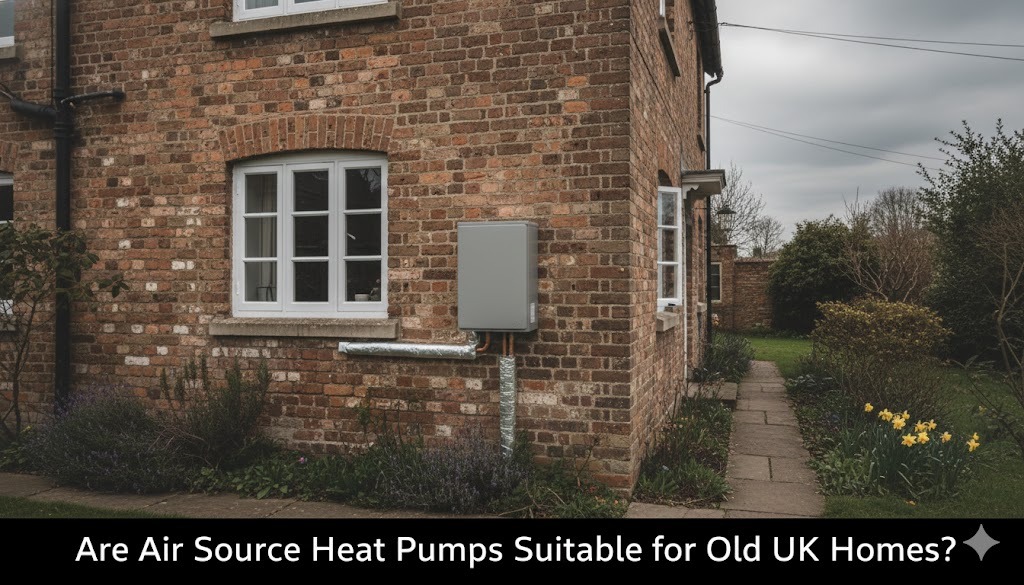
Winter in older UK homes can be cold, and heating bills are a real worry for many. Newer options, like air source heat pumps, are also considered with growing interest. The key question remains: do heat pumps work in older homes? They do, but only with the right setup. Older houses lose their heat quickly, and the costs rise each winter.
Air source heat pumps draw heat from the outside air, even when it is cold, and transfer it indoors using electricity rather than gas. They are cleaner and more energy-efficient than boilers, yet proper installation is crucial in older housing stock.
How Heat Loss Happens in Old Homes
Many pre-insulation-rule homes lose heat through walls and roofs, and through old windows, driving up heating costs. Air source heat pumps do not blast heat out; they ease warmth in steadily. That, of course, means good insulation is crucial to get the most out of them.
Improved insulation therefore enables the heat pump to work effectively with lower bills over time. This includes cavity wall insulation, loft insulation, double glazing, and draught-proofing-all reduce the loss of heat and support better performance.
Do Heat Pumps Work Well in Old Homes?
They can function quite well in older houses as well, so long as certain perquisites are satisfied. First, the heating system must fit the building. Older houses often have low-capacity radiators that need very hot water to heat rooms; heat pumps produce cooler water than gas boilers, and the small radiators just can’t cope. The fix is to use larger radiators or switch to underfloor heating.
Every home requires a detailed heating survey. The installer will need to assess insulation, room sizes, and radiator needs to correctly size the system. A correctly sized pump will run smoothly year after year with no struggles in the cold months.
Do Old Homes Need Major Changes?
Heat pumps may work in older UK homes, but typically require a few on-the-front-end upgrades first. Begin with better insulation to cut down waste from daily energy. Many local councils provide grants for this type of improvement. There are also air source heat pump grants that can offset installation costs, making the switch more financially feasible.
In most older houses, you will want to replace old heating pipes so that the warm water circulates efficiently, while in others, installing larger radiators will suffice. This part is usually quite straightforward for the installers. Underfloor heating, which is optional, works quite well with the lower heat you get from a heat pump; it provides steady warmth across the floor.
Benefits of Heat Pumps for Older Homes
- Heat pumps reduce carbon emissions significantly that helps the UK move toward greener energy goals.
- Heat pumps also reduce monthly heating costs, because they use less energy in total than gas boilers, making them cheaper to run long-term.
- Because they can offer steady indoor temperatures daily, rooms will remain warm without large swings, increasing comfort in winter.
- Heat pumps can also cool rooms in summer that help older homes stay comfortable in heatwaves.
- This creates year-round benefits for homeowners, while adding value to older properties.
Common Concerns About Heat Pumps in Old Homes
Many homeowners think heat pumps will not work. They worry the home is too draughty today. They also fear high installation costs upfront. But grants help reducing these costs to zero now. The ECO4 LA Flex offers strong support. It covers 100% toward heat pump in addition to solar panels installation. This makes the switch easier for old homes.
Some people worry that heat pumps are not as “cozy, but they provide consistent heat all day without the sudden drops you sometimes get with other systems. When needed, larger radiators boost warmth and keep comfort high in older homes.
What to Check Before Installing a Heat Pump
First, check the insulation; solid insulation makes heat pumps much more efficient. Check radiator sizes and pipework; some homes may need larger radiators. Look at energy bills and the age of the boiler; older boilers waste more energy than newer ones, so the sooner you switch, the more long-term savings. You can also search for local grants to shave installation costs.
Next, call in a qualified heat pump installer to do a proper home assessment. They will assess the heat loss, insulation requirements, and thereby recommend a proper system size that will serve well and eliminate possible future problems or costly mistakes.
Final Thoughts
Air source heat pumps suit older UK homes so long as the house is well prepared with insulation and upgraded radiators. Detailed surveys provide accurate system sizing. Grants assist today, and schemes like the ECO4 Scheme help deliver warmth, comfort in homes, lower bills over time, and greener, efficient older homes.
About the Author