
David Icke
Few public figures generate the level of fascination, criticism, and debate that David Icke inspires. For more than three decades, his name has been tied to provocative claims about politics, media, global power structures, and the nature of reality itself. Whether someone sees him as a visionary, a conspiracy theorist, or simply an unconventional thinker who pushed boundaries too far, there is no denying his impact on modern alternative discourse. His books, interviews, speaking events, and online presence—from the David Icke website to the massive audience he developed on YouTube—continue to shape cultural conversations across multiple generations.
This article takes a deep, critical, and evidence-based look at David Icke’s life, philosophies, controversies, and influence. It avoids sensationalism and instead focuses on clarity, context, and accuracy. By the end, you’ll understand not just what he believes, but why millions engage with his work, how he built his platform, and what his legacy means today.
Early Life and Career Before the Spotlight
Understanding David Icke requires tracing how he evolved from a mainstream public figure into one of the most controversial authors of the last century. Born in 1952 in Leicester, England, he grew up in a working-class environment and initially pursued a career in professional football. After injuries ended that path early, he transitioned into sports journalism and later became a household face as a presenter on BBC programs, particularly in sports broadcasting.
During the 1980s, he appeared poised for a long, conventional media career. But by the end of the decade, Icke began describing profound personal experiences—what he interpreted as spiritual awakenings, intuitive downloads, and sudden shifts in perception. These experiences eventually pushed him out of mainstream media and into alternative research, writing, and public speaking.
His transformation became fully public in 1991, during an infamous appearance on BBC’s Wogan, where he described himself as guided by higher consciousness. The British press ridiculed him for years after, but Icke doubled down, spending the next decades producing work that attracted a global audience.
David Icke’s Core Themes and Philosophies
Throughout his writing and lectures, Icke has focused on several recurring ideas. These themes tend to overlap with broader conspiracy culture, spiritual philosophy, and alternative science.
1. Global Power Structures
Icke argues that political and financial systems are less democratic and transparent than assumed. His critics often label these ideas as conspiratorial, but his supporters believe he is exposing suppressed truths about centralized power, elite influence, and global governance.
2. The Nature of Reality
A major element of his philosophy is metaphysical rather than political. Icke frequently discusses consciousness, multidimensionality, and the belief that reality is a kind of controlled simulation. These themes place him closer to New Age movements than political activism.
3. Perceived Manipulation of Public Perception
Long before discussions about media literacy or disinformation became mainstream, Icke claimed that public opinion is shaped by institutions with hidden motives. Whether people agree with him or not, this idea has become central to online discourse in the 21st century.
4. The Controversial Reptilian Hypothesis
One of Icke’s most polarizing claims involves non-human entities influencing world events. This idea has drawn criticism, parody, and accusations of pseudoscience. Yet, paradoxically, it also made him a cultural phenomenon, especially online.
David Icke Books: A Prolific Body of Work
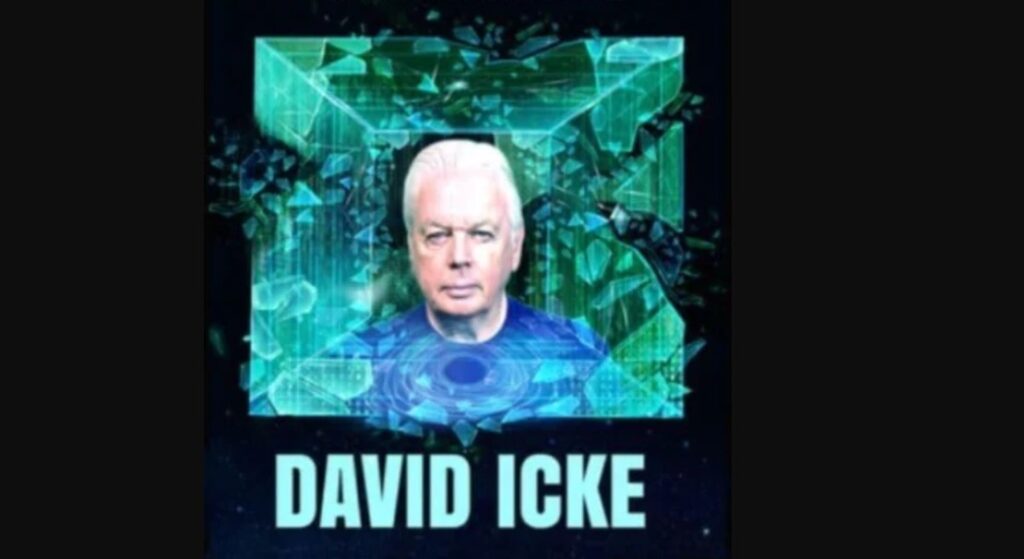
Despite criticism, Icke’s bibliography is extensive. David Icke books have been translated into multiple languages and continue to sell internationally. His writing style combines long-form commentary, investigative claims, and philosophical exploration.
Notable works include:
The Trigger (2019)
David Icke The Trigger stands out as one of his most controversial books. It attempts to reinterpret major geopolitical events, including 9/11. Critics argue the book amplifies conspiracy theories without sufficient evidence; supporters see it as an attempt to challenge mainstream narratives. Regardless of interpretation, The Trigger has sparked significant debate, further cementing Icke’s cultural relevance.
The Biggest Secret (1999)
This book popularized many of Icke’s core claims about hidden elites. Even today, it circulates widely in alternative communities.
Human Race Get Off Your Knees (2010)
A mix of metaphysics and political commentary, this work explored ideas about consciousness and human potential.
Infinite Love Is the Only Truth (2005)
This title shows a softer, philosophical dimension to his worldview, focusing on spiritual awakening rather than geopolitics.
Whether someone agrees with Icke’s conclusions or not, his books demonstrate consistent themes: skepticism toward official narratives, exploration of hidden forces, and emphasis on awakening the human mind.
Also Read: Izonemedia360.com Entrepreneur Innovation and Growth
The David Icke Website and Digital Presence
As mainstream platforms increasingly moderated or restricted his content, Icke built his own digital ecosystem. The David Icke website functions as a hub for videos, articles, news commentary, and book sales. It has become the primary place for his supporters to access his work after restrictions were placed on his social media accounts.
David Icke YouTube
For years, David Icke YouTube content was a major driver of his global reach. His long-form interviews and documentaries accumulated millions of views. Even after platform bans and removals, his supporters continuously upload excerpts, preserving his digital footprint.
David Icke Forum
The David Icke forum remains a gathering place for readers and supporters to discuss world events through the lens of his theories. It’s a mix of political debates, spiritual conversations, user-generated research, and speculation. The forum’s longevity proves that Icke’s community is deeply engaged, not passive.
David Icke Net Worth and Financial Controversies
Speculation about David Icke net worth circulates online, though exact figures vary. Public estimates range from modest to multimillion. It’s impossible to pinpoint a precise number without verified financial disclosures, but several key factors influence his income:
Revenue Streams
- Book sales from more than 20 titles
- Speaking tours across Europe, the U.S., and Australia
- Website subscriptions
- Merchandise and digital downloads
His critics claim he profits from sensationalism, while his supporters argue that he earns legitimately through independent publishing and events. Regardless, his business model mirrors that of many authors and public speakers in the digital age.
Why David Icke Remains Culturally Relevant
Even people who disagree with Icke cannot deny his influence. His presence in global debate is not accidental; it’s the result of several strategic advantages:
1. He Built a Decentralized Platform
Long before content monetization became mainstream, Icke was publishing independently. This insulated him from traditional gatekeeping.
2. He Appeals to People Dissatisfied With Official Narratives
During times of social distrust—economic upheaval, political polarization, media fragmentation—figures like Icke flourish. He speaks directly to skepticism, regardless of whether his conclusions are accurate.
3. He Blends Spiritual and Political Commentary
This combination appeals to individuals seeking alternative explanations for both personal and global experiences.
4. The Internet Amplified His Ideas
Message boards, early forums, and eventually YouTube created fertile ground for unconventional viewpoints.
Criticism, Controversy, and Public Backlash
No examination of David Icke would be valid without acknowledging the intensity of criticism directed at him. Academic institutions, journalists, and watchdog organizations frequently dispute his claims, labeling them misleading, speculative, or harmful. He has faced platform bans, canceled events, and widespread media condemnation.
Key Areas of Concern
- Lack of empirical evidence supporting many of his assertions
- Association with fringe theories that can spill into misinformation
- Interpretations of symbolism that mainstream experts argue are nonfactual
- Statements interpreted as socially or politically inflammatory
Scholars in psychology and sociology often analyze his popularity as a reflection of broader social distrust rather than validation of his specific theories.
Supporters’ Perspective: Why Millions Follow Him
To understand his influence honestly, you must acknowledge why supporters resonate with him. They often mention:
- His willingness to challenge powerful institutions
- His consistency and perseverance despite ridicule
- The blend of spiritual and political commentary
- His message about personal empowerment and questioning reality
- A belief that censorship increases his credibility rather than diminishing it
Whether this loyalty is justified depends on one’s interpretation of his work, but the devotion is undeniably strong.
David Icke in the Modern Information Landscape
The rise of social media, alternative platforms, and decentralized content distribution practically guaranteed that someone like Icke would become a cultural flashpoint. His messages intersect with anxieties about surveillance, corruption, globalization, and the collapse of institutional trust.
He also became a case study in:
- Deplatforming
- The spread of unverified claims online
- Digital radicalization
- The psychology of belief systems
- The role of charismatic personalities in information wars
In academic environments, David Icke is frequently cited when analyzing how fringe narratives enter mainstream dialogue.
Actionable Insights for Readers: How to Approach Claims Critically
Regardless of whether you support or oppose Icke’s ideas, a critical-thinking framework is essential:
1. Verify Sources
Look beyond claims and examine the origin of evidence. Peer-reviewed studies, primary documents, and independent investigations matter far more than anecdotal statements.
2. Distinguish Hypothesis From Fact
Icke often blends metaphor, speculation, and assertion. Evaluate each piece separately.
3. Understand Cognitive Bias
Confirmation bias, pattern recognition, and emotional reasoning heavily influence how people interpret information.
4. Seek Multiple Perspectives
Relying solely on Icke—or solely on media sources that oppose him—is intellectually limiting.
5. Apply Proportional Skepticism
Healthy skepticism questions claims proportionally to their impact.
These principles allow readers to evaluate not just Icke, but any provocative thinker.
Conclusion: The Complex Legacy of David Icke
David Icke remains one of the most polarizing figures in modern discourse. His extensive body of work, massive online following, and relentless focus on challenging mainstream narratives have made him impossible to ignore. Whether seen as a visionary who warns about unseen forces or a creator of elaborate unverified theories, his influence spans decades and continents.
As the digital world becomes more chaotic, his ideas—accurate or not—continue to resonate with people seeking explanations that feel deeper than official statements. That alone ensures that David Icke’s legacy, controversial as it is, will remain part of cultural conversation for years to come.
FAQs
1. What is David Icke best known for?
His theories about global power structures, metaphysics, and alternative interpretations of world events.
2. Where can I find David Icke books?
Most are available through his official website and various online retailers.
3. Why is David Icke banned from some platforms?
Certain claims he made violated platform policies on misinformation.
4. Is David Icke net worth publicly confirmed?
No. Estimates exist online, but none are verified through financial filings.
5. Does David Icke still publish new work?
Yes. He continues releasing books, interviews, and updates on the David Icke website.
Also Read: 198.54.124.245 (Rebahin) Safe Access Risks & Legal Guide
About the Author